 Fresh Start Special: Save 15% On initial Deep Cleaning!
Essential Cleaning Tips for Older Homes in Summit, NJ
The most effective cleaning tips for older homes focus on gentle surface care: dry-dusting plaster and woodwork, damp-mopping antique wood floors with minimal moisture and pH-neutral cleaners, and avoiding abrasive chemicals on vintage tile and fixtures. Historic properties require thoughtful techniques to prevent moisture buildup and surface wear. When exploring home improvement tips for your new Summit home, gentle maintenance should remain central to protecting classic Victorian, Colonial, and Craftsman architecture while keeping living spaces fresh and welcoming.
Preserving Original Hardwood and Historic Trim
Original hardwood floors—often crafted from old-growth oak, heart pine, or maple—are standout architectural features in historic homes. Over decades, these surfaces may have been coated with traditional paste wax, shellac, or modern polyurethane sealants.
To clean antique wood floors without causing moisture damage or dulling the finish:
- Dry Dust Frequently: Sand and grit act like sandpaper under foot traffic. Sweep daily with a soft microfiber dust mop or vacuum using a dedicated bare-floor brush attachment (never use a rotating beater bar).
- Mop with Minimal Moisture: When damp mopping is necessary, use a well-wrung microfiber mop that is barely damp to the touch. Standing water can seep into joints between antique floorboards, causing swelling, cupping, or finish discoloration.
- Stick to pH-Neutral Formulas: Avoid harsh ammonia, bleach, or highly acidic vinegar solutions, which can strip protective wax or eat through clear coats. Choose mild, pH-neutral wood cleaners instead.
- Tend to Architectural Woodwork: Baseboards, wainscoting, solid wood doors, and ornate door frames gather substantial dust. Wipe them down periodically with dry or barely damp microfiber cloths, working with the grain to avoid trapping dust in carved grooves.
Surface Care and Cleaning Tips for Older Homes in Summit, NJ
Delicate vertical surfaces and historic accents require specialized care to prevent accidental wear:
- Plaster Walls: Traditional lath-and-plaster walls are more porous and brittle than modern drywall. Never scrub plaster vigorously with water or wet sponge mops, as moisture can weaken the plaster keys behind the lath. Instead, use dry microfiber dusting pads or an upholstery brush attachment on a vacuum to lift surface cobwebs and loose dust.
- Stained Glass and Leaded Windows: Vintage colored glass panels and lead cames should never be sprayed with harsh window cleaning fluids containing ammonia, which can oxidize the lead or corrode soldering. Gently wipe the glass surfaces using a soft cloth dampened only with distilled water, drying immediately with a clean lint-free cloth.
- Vintage Hardware and Light Fixtures: Antique brass, bronze, and copper switch plates or lighting fixtures often carry an aged patina. Clean them gently with dry microfiber cloths rather than abrasive metal polishes, which can strip historic plating.
- Lead-Safe Awareness: In homes built before 1978, friction surfaces like original double-hung window sashes and door jambs may contain layers of older paint. Never dry-sand, scrape, or aggressively scrub flaking paint. Use wet-wiping techniques with disposable damp towels to capture loose dust safely without dispersing particles into the air.
Managing Dust, Allergens, and Pet Dander in Historic Architecture

Older construction naturally accumulates more dust than modern airtight buildings. Uninsulated wall cavities, settling floorboards, and gravity-fed heating layouts can accelerate particulate circulation. Understanding why dust builds up in some rooms faster helps prioritize high-traffic zones and historic architectural details that act as dust traps.
Managing indoor air quality also means implementing practical methods to reduce home allergens tips across every floor. In households with dogs or cats, pet hair and dander settle quickly into deep floor seams and decorative trim, requiring proactive, consistent cleaning protocols.
Addressing High Ceilings, Radiators, and Baseboards
Historic architecture creates specific cleaning challenges due to generous ceiling heights and legacy heating systems:
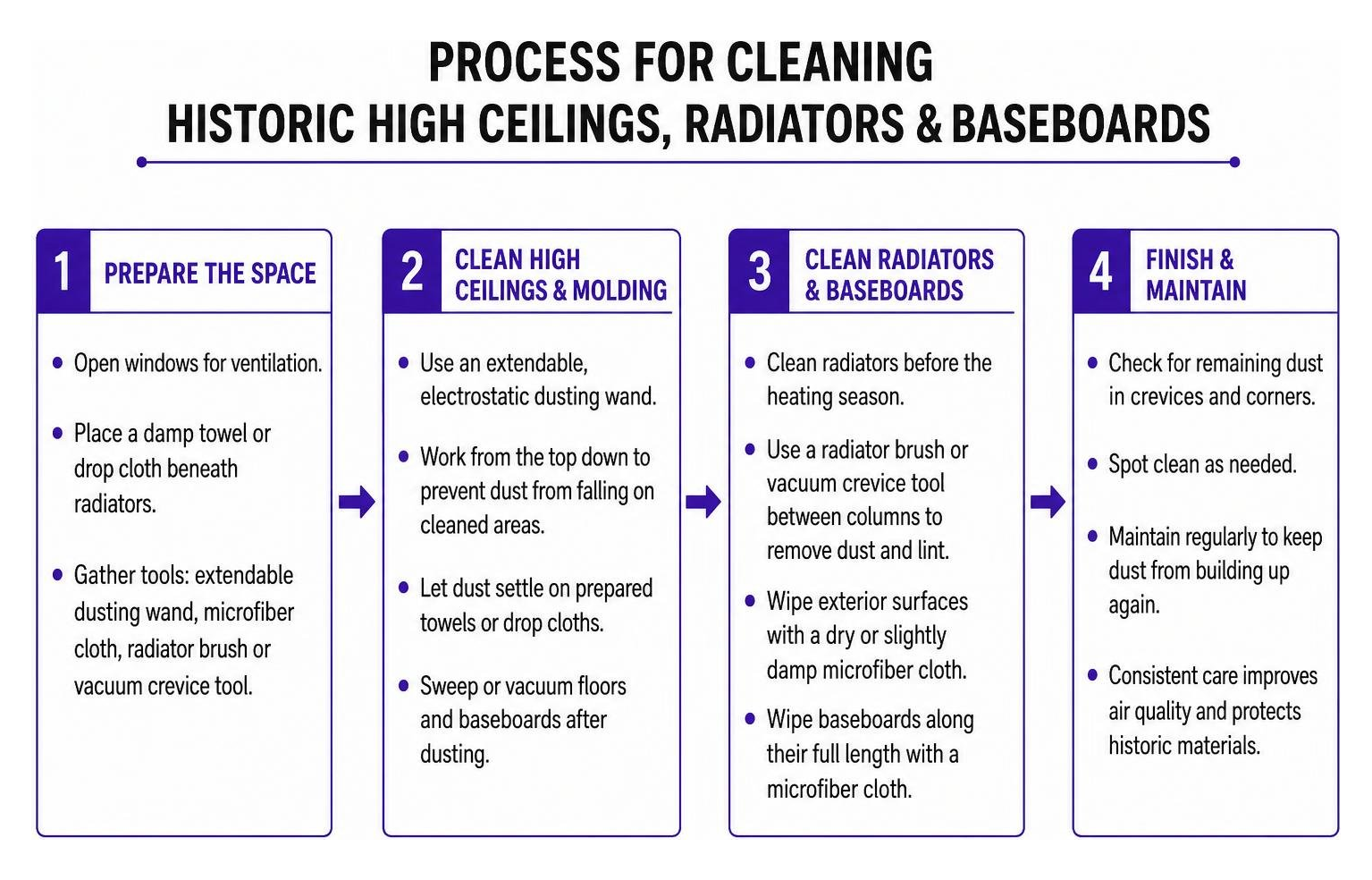
- High Ceilings and Crown Molding: Victorian and Colonial layouts often feature 9- to 10-foot ceilings. Use extendable, electrostatic dusting wands rather than feather dusters, which merely scatter particles into the air. Work from top to bottom so fallen dust can be swept from baseboards and floors afterward.
- Cast-Iron Radiators: Radiator fins act as thermal convection engines, pulling room dust through the bottom and venting it upward. Clean radiators before the heating season begins by placing a damp towel beneath the unit and using a narrow radiator brush or a vacuum crevice tool between the columns to dislodge trapped lint.
- Window Sills and Trim: Deep sashes and decorative window sills catch both indoor dust and outdoor soot. Wipe these painted surfaces weekly with a damp microfiber cloth to prevent grit from settling into the wood grain.
Seasonal Maintenance and Cleaning Tips for Older Homes in Summit, NJ
Summit experiences cold winters and humid summers. Seasonal shifts cause historic timber frames to expand and contract, altering airflow and indoor dust patterns.
- Fall Pre-Winter Prep:
- Vacuum and wipe down cast-iron radiators, baseboard covers, and heating registers before turning on the heat.
- Wipe window sills and inspect interior sash perimeters for loose dust or moisture intrusion.
- Vacuum door frames and draft-prone thresholds where exterior debris collects.
- Spring Post-Winter Refresh:
- Dust ceiling fans, high crown moldings, and picture rails that collected furnace dust all winter.
- Perform a detailed wipe-down of all baseboards, interior doors, and door frames to clear winter soot.
- Carefully vacuum vintage window sills to remove trapped springtime pollen.
- Summer Humidity Controls:
- Wipe bathroom and kitchen cabinetry surfaces regularly to prevent high humidity from binding airborne oils to wood finishes.
- Dry-dust vintage surfaces frequently, as sticky summer humidity causes dust to adhere more firmly to delicate trims.
Deep Cleaning Kitchens and Bathrooms with Vintage Fixtures
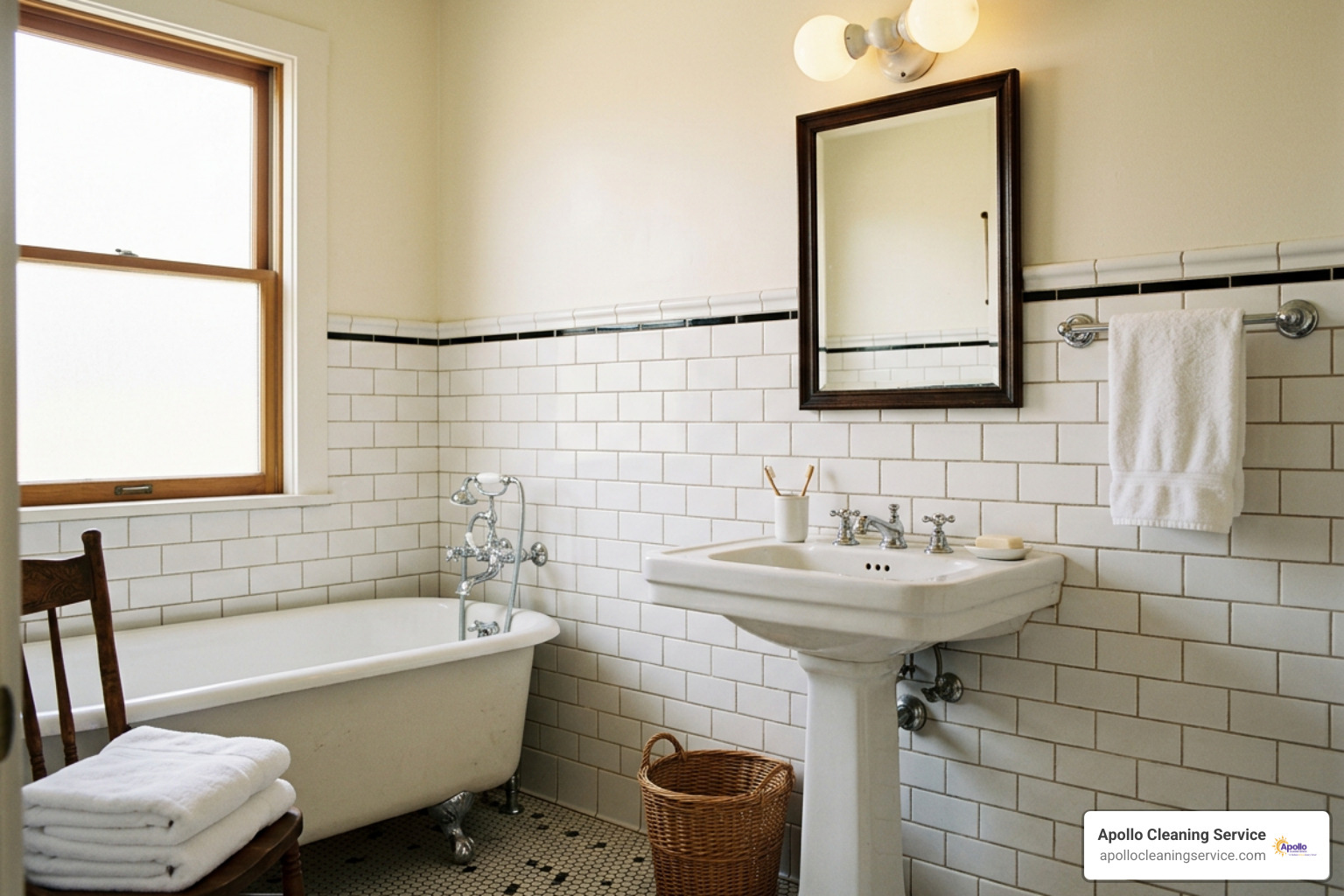
Kitchens and bathrooms in classic homes feature distinct challenges: original subway tile, thick mortar beds, unsealed grout, clawfoot tubs, and period cabinetry. When undertaking deep cleaning services, the priority is removing grease, soap scum, and buildup without compromising delicate surfaces.
Protecting Aging Subway Tile, Grout, and Cabinetry
Historic tiling requires gentle, non-corrosive techniques:
- Subway Tile Care: Antique ceramic tiles have delicate glazes that can etch or scratch if scrubbed with wire brushes or harsh scouring powders. Clean them using soft microfiber sponges and mild dish soap diluted in warm water.
- Grout Maintenance: Older grout lines are often cement-based and porous. Acidic cleaners (including heavy vinegar mixtures) can erode historic grout over time. Use a paste of baking soda and water applied with a soft-bristled toothbrush to lift surface discoloration gently.
- Vintage Cabinetry: Solid wood cabinets in period kitchens collect grease near ranges. Wipe cabinet faces using warm water mixed with a small amount of mild vegetable-based soap, drying thoroughly with a clean towel to protect wood joints from moisture absorption.
- Porcelain Fixtures: Vintage sinks and clawfoot tubs should never be cleaned with bleach or abrasive scouring pads. Use gentle, non-scratch liquid cleaners to lift residue while protecting the original enamel finish.
Gentle, Non-Toxic Formulas for Historic Finishes
Using mild cleaning solutions prevents chemical degradation on historic home surfaces. Integrating structured cleaning checklists ensures delicate areas are cleaned with suitable products.
| Surface Type | Recommended Gentle Cleaner | Tools to Use | What to Avoid |
|---|---|---|---|
| Original Hardwood Floors | Warm water with a few drops of pH-neutral soap | Damped microfiber flat mop | Excess water, ammonia, vinegar, steam mops |
| Plaster Walls & Ceilings | Dry electrostatic pads | Long-reach dusters, vacuum soft brush | Wet sponges, abrasive cleaners, wall scrubbers |
| Historic Subway Tile & Grout | Baking soda paste, mild dish liquid | Soft nylon bristle brushes, microfiber cloths | Acidic descalers, bleach, wire scouring pads |
| Wood Trim, Doors & Baseboards | Lightly dampened microfiber cloth | Clean microfiber towels | Harsh solvent sprays, heavy furniture waxes |
| Cast-Iron Radiators | Vacuum crevice tool, dilute mild soap | Radiator brushes, damp drop cloth | Steel wool, unventilated chemical degreasers |
Frequently Asked Questions About Cleaning Older Summit Properties
How often should historic homes receive a deep clean?
Historic homes benefit from a detailed deep cleaning once or twice a year, typically in spring and autumn. Because older construction features detailed moldings, deep baseboards, and radiator networks that gather dust over time, a semi-annual detailed cleaning combined with consistent routine maintenance keeps dust and allergens under control.
What is the safest way to remove dust from delicate plaster walls?
The safest approach is completely dry cleaning. Use an extendable pole fitted with an electrostatic microfiber head or a vacuum cleaner equipped with a soft dusting brush. Move gently in overlapping strokes from the top of the wall downward. Avoid applying wet cleaning solutions, as excess water can penetrate older paint layers and soften the historic plaster substrate beneath.
How can you protect antique wood floors during regular cleaning?
Protect antique hardwood by minimizing water exposure, using soft-bristled floor attachments, and applying only pH-neutral cleaning agents. Never use steam mops, which force high-temperature moisture deep into wood joints, breaking down historic adhesives and warping planks. Placing protective felt pads under furniture legs and using walk-off mats at entryways also prevents abrasive grit from scratching original boards.
Caring for Your Historic Summit Home
Maintaining an older home requires patience, attention to detail, and a gentle touch. By focusing on routine dust management, using pH-neutral cleaning formulas, and avoiding excess moisture on original wood, plaster, and vintage tile, you can preserve your home’s historic integrity while enjoying a fresh, clean living space.
If managing the detailed upkeep of your historic property feels overwhelming, our experienced team is here to assist. At Apollo Cleaning Service, we provide dependable, tailored cleaning solutions throughout North-Central New Jersey. Explore how our recurring visits or detailed cleanings can support your home by scheduling a professional House Cleaning Service Summit NJ today.
