 Fresh Start Special: Save 15% On initial Deep Cleaning!
Why Deep Cleaning New House Interiors Before Move-In Is Essential
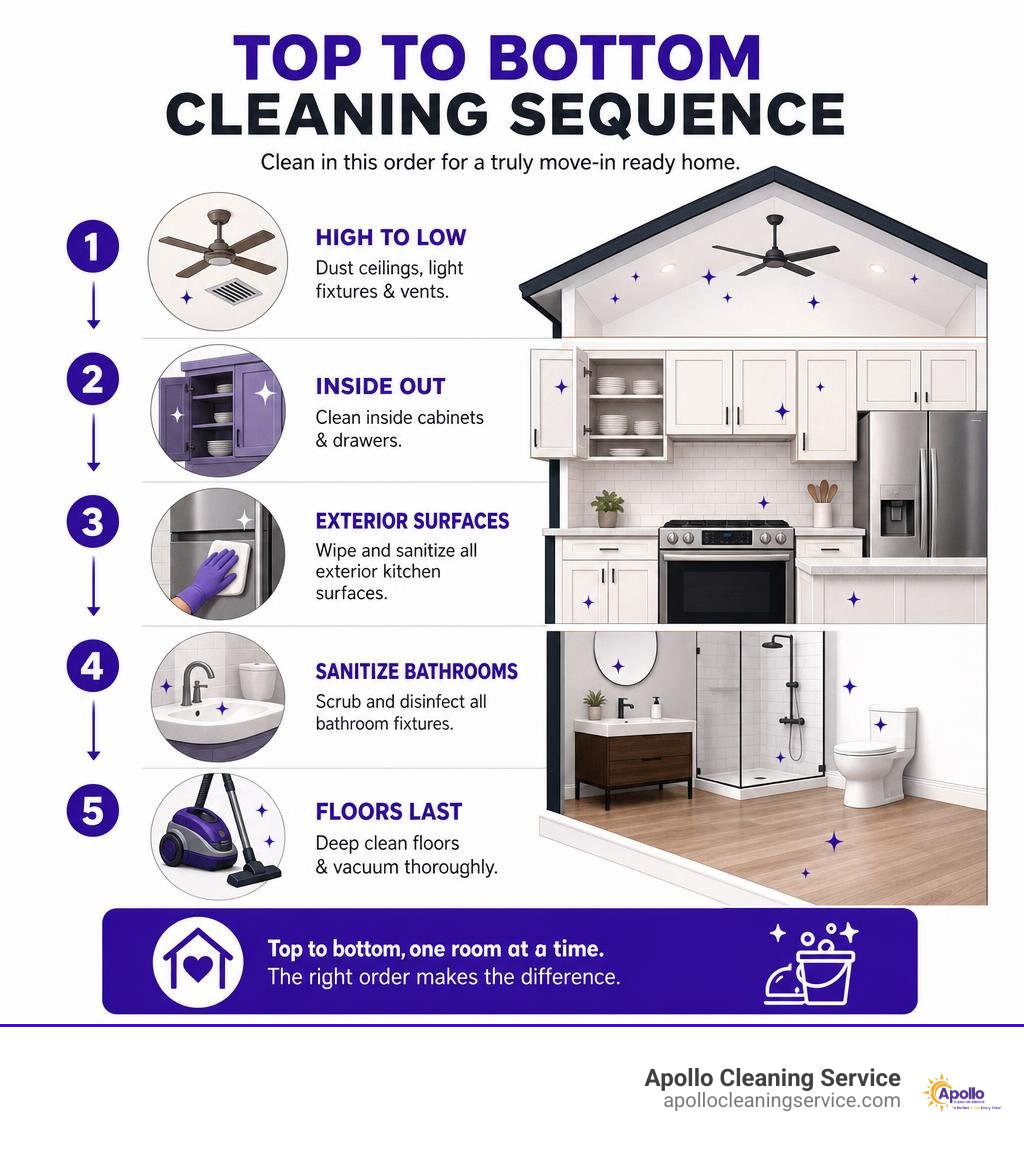
When deep cleaning new house interiors before move-in day, the most effective approach is working top-to-bottom through the empty space before any furniture arrives. A complete move-in clean involves dusting high fixtures and ceiling vents, wiping inside cabinets and drawers, sanitizing exterior kitchen surfaces, scrubbing and disinfecting bathroom fixtures, and finishing with deep floor extraction and HEPA vacuuming. Executing these steps while rooms and closets are vacant ensures you eliminate accumulated dust, residues, and germs without obstruction.
Most real estate contracts only obligate departing occupants or builders to leave a property in “broom-clean” condition. Broom clean simply means the floors are swept of large trash, debris is removed, and surfaces are cleared of personal belongings. It does not mean the space is disinfected, degreased, or free of microscopic contaminants.
Research from the University of Arizona’s Department of Soil, Water, and Environmental Science revealed that the average kitchen countertop harbors more bacteria per square inch than a standard toilet seat. When you move in, you place food, cookware, and everyday items directly onto these surfaces. Without a proper sanitization protocol, you inherit the microbial footprint of previous occupants or construction crews.
Furthermore, allergens settle deeply into the structure of a home. A landmark 2022 study published in Indoor Air found that residential carpet allergens—including pet dander, dust mites, and mold spores—persist for months after the animal or moisture source is gone. Regular surface vacuuming cannot pull out these deeply embedded particles. According to scientific research on carpet allergens, true environmental reset requires thorough extraction before furniture is brought into the home.
Resale Homes vs. New Construction: Different Cleaning Needs
The cleaning protocol you need depends heavily on whether you are moving into an existing resale property or a newly constructed home. Each presents entirely different contaminants that require specific techniques to neutralize safely.
In pre-owned homes, the priority is eliminating organic grime, body oils, and accumulated grease left behind by previous occupants. Kitchens often have residue on exterior appliance surfaces, while bathrooms may harbor mildew or scale on plumbing fixtures.
Brand-new construction homes look fresh at first glance, but they harbor fine drywall particulate, airborne silica dust, and sawdust trapped inside cabinetry corners and HVAC returns. Construction adhesives and fresh paint release volatile organic compounds (VOCs) that settle onto bare surfaces. Professional post-construction cleaning focuses on HEPA air scrubbing, mechanical dust removal, and solvent-free residue wiping so you do not breathe in fine construction dust after moving in.
Strategic Planning: Supplies, Sequencing, and Timelines
A successful move-in clean relies on proper preparation. Before picking up a mop or spray bottle, complete a few non-negotiable setup steps:
- Activate Utilities Early: Ensure electricity, heating/cooling, and running water are turned on at least 24 hours prior to cleaning. Trying to scrub bathrooms without hot water or clean a dark basement without overhead lighting makes the job twice as hard.
- Conduct a Photo Walkthrough: Walk through every room with your phone flashlight. Photograph pre-existing scratches on hardwood, chipped tiles, drywall dings, or water stains under sinks. This timestamped documentation protects your security deposit if renting or helps support home warranty claims.
- Purge the Air: Open windows for 30 minutes to create cross-ventilation, flushing out stale air, cleaning fumes, and paint off-gassing. Set your HVAC fan to circulate while keeping fresh filters on hand.
Essential Supplies for Deep Cleaning New House Surfaces
Attempting a deep clean with a single bottle of all-purpose spray and a roll of paper towels will only push grime around. Assembling a complete kit ensures you never have to pause midway to run to the hardware store.
Our field-tested move-in toolkit includes:
- Commercial HEPA Vacuum: Essential for capturing fine drywall dust, sawdust, and pet dander without blowing micro-particles back into the air.
- Microfiber Cloths (Color-Coded): Use distinct colors (e.g., blue for glass, yellow for kitchens, red for bathrooms) to eliminate cross-contamination risks.
- Eco-Friendly Degreaser & Multi-Surface Cleaners: Plant-derived, low-VOC cleaning agents that cut through kitchen oils on counters, backsplashes, and other approved surfaces without leaving harsh chemical fumes.
- Specialized Brushes: Detail brushes for faucet bases, an extendable duster (reaching 12+ feet) for high ceilings and ceiling fan blades, and baseboard-safe tools for lower trim.
- Enzyme Cleaner & Mineral Descaler: Formulated products for dissolving hard-water scale on fixtures and breaking down pet-related organic residue.
- Protective Gear: Heavy-duty rubber gloves, non-slip shoe covers, and ergonomic knee pads for baseboard scrubbing.
For detailed equipment recommendations, explore our curated cleaning checklists to organize your move-in day kit.
The Most Efficient Top-to-Bottom Cleaning Sequence
The golden rule of deep cleaning is working strictly from top to bottom and back to front. Dust and debris naturally follow gravity; cleaning baseboards or vacuuming floors before wiping light fixtures guarantees you will end up cleaning the same floor twice.
Begin at the highest point in the room:
- Dust ceiling corners, crown moldings, and HVAC ceiling registers using an extendable duster.
- Clean ceiling fan blades using the “pillowcase method”—slip an old pillowcase over each blade and pull it back slowly so all trapped dust falls inside the fabric rather than across the room.
- Wipe down light fixtures, blinds, doors, door frames, switch plates, and baseboards.
- Clean built-in shelving, cabinet interiors, countertops, and exterior appliance surfaces. Inside-appliance cleaning is available as an add-on rather than part of standard deep cleaning or move-in/out cleaning.
- Detail baseboards by dry-vacuuming them first using a brush attachment. Vacuuming dry dust prevents it from turning into a smeared mud paste when wiped with a damp cloth.
- Finish with the floors, vacuuming carpets or damp-mopping hard surfaces from the furthest corner of the room backward toward the doorway.
The time required to clean depends on the home’s square footage, physical layout, and baseline condition:
Room-by-Room Execution: Kitchen, Bathrooms, and Living Spaces
To avoid feeling overwhelmed, organize your clean room by room. Finish one space completely before moving on to the next. Following proven move-in cleaning tips ensures you systematically sanitize every high-impact area without missing hidden grime.
Room-by-Room Checklist for Deep Cleaning New House Layouts
Kitchen Cleaning: Counters, Cabinets, Sinks, and Exterior Appliances
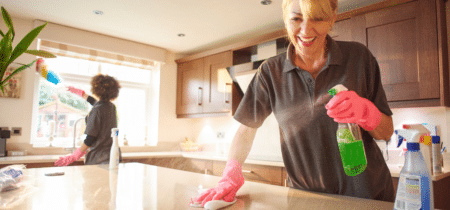
The kitchen demands the most labor during a move-in deep clean because it holds food-prep surfaces, built-in storage, and high-touch exterior appliance surfaces. Start by dusting cabinet tops and wiping inside empty cabinets, drawers, and pantry shelves before sanitizing countertops, backsplashes, sink basins, faucets, and exterior appliance surfaces.
Focus on areas where grease, crumbs, and fingerprints collect quickly: cabinet pulls, switch plates, backsplash edges, stovetop surrounds, range hood exterior surfaces, and the front and sides of major appliances. Standard deep cleaning and move-in/out cleaning do not include inside-appliance cleaning, so refrigerator interiors, oven interiors, and other internal appliance areas should be scheduled as add-ons if needed.
Bathroom Sanitation: Fixtures, Toilets, and High-Touch Surfaces
Bathrooms require careful sanitization rather than light surface wiping. Disinfectants need sufficient contact dwell time (often 5 to 10 minutes) on damp surfaces to kill bacteria, viruses, and fungi effectively.
- Toilet Replacement or Sanitization: We strongly recommend replacing toilet seats outright when moving into a pre-owned home. A new seat costs between $25 and $50 and provides instant peace of mind. If keeping existing fixtures, remove the mounting bolts completely to clean the accumulated grime underneath the hinge plates.
- Fixture and Tile-Surface Cleaning: Standard deep cleaning can address soap scum, mineral residue, and high-touch bathroom surfaces, but tile/grout cleaning or any type of restoration is not included in deep cleaning or move-in/out cleaning.
- Showerheads and Drains: Remove visible mineral buildup on showerheads using an appropriate bathroom cleaner and clear loose debris from accessible drain covers before running water.
- Ventilation Fans: Dust bathroom exhaust fan covers and accessible exterior surfaces to support airflow and reduce visible buildup.
Flooring Care: Hardwood, Tile, and Carpet Extraction
Floors should always be the final step of your room clean. Different materials require specific care to avoid moisture damage:
- Hardwood and Engineered Wood: Never oversaturate natural wood. Use a barely damp microfiber flat mop paired with a pH-neutral wood cleaner. Excess moisture seeps into seams, causing boards to cup or warp.
- Ceramic and Porcelain Tile: Sweep thoroughly, then mop using a specialized tile cleaner. For restoration-level grout work, use a dedicated tile/grout service outside the standard deep cleaning scope.
- Wall-to-Wall Carpeting: Standard consumer vacuuming is not enough for carpets previously exposed to pets or heavy foot traffic. Use commercial hot-water extraction (steam cleaning) to flush out deeply embedded allergens and dander. If hiring professional carpet cleaners, schedule this 24 hours before furniture delivery to give the pile adequate time to dry.
For seasonal deep cleaning strategies across various climates and materials, consult our summer deep cleaning checklist.
DIY vs. Professional Services and Move-In Final Steps
Deciding whether to clean your new home yourself or hire a professional crew comes down to your available time, physical energy, and budget. When asking is deep cleaning worth the cost, moving is already physically exhausting. Spending 15 hours sanitizing bathrooms, detailing baseboards, and cleaning high-touch surfaces immediately after closing can quickly burn you out.
Standard move-in deep cleaning packages across North-Central New Jersey generally range from $200 to $500 depending on home size and condition. A hybrid approach also works well: handle basic dusting and closet shelving yourself, and hire dedicated move cleaning services for standard move-in/out cleaning, then add inside-appliance cleaning separately if needed.
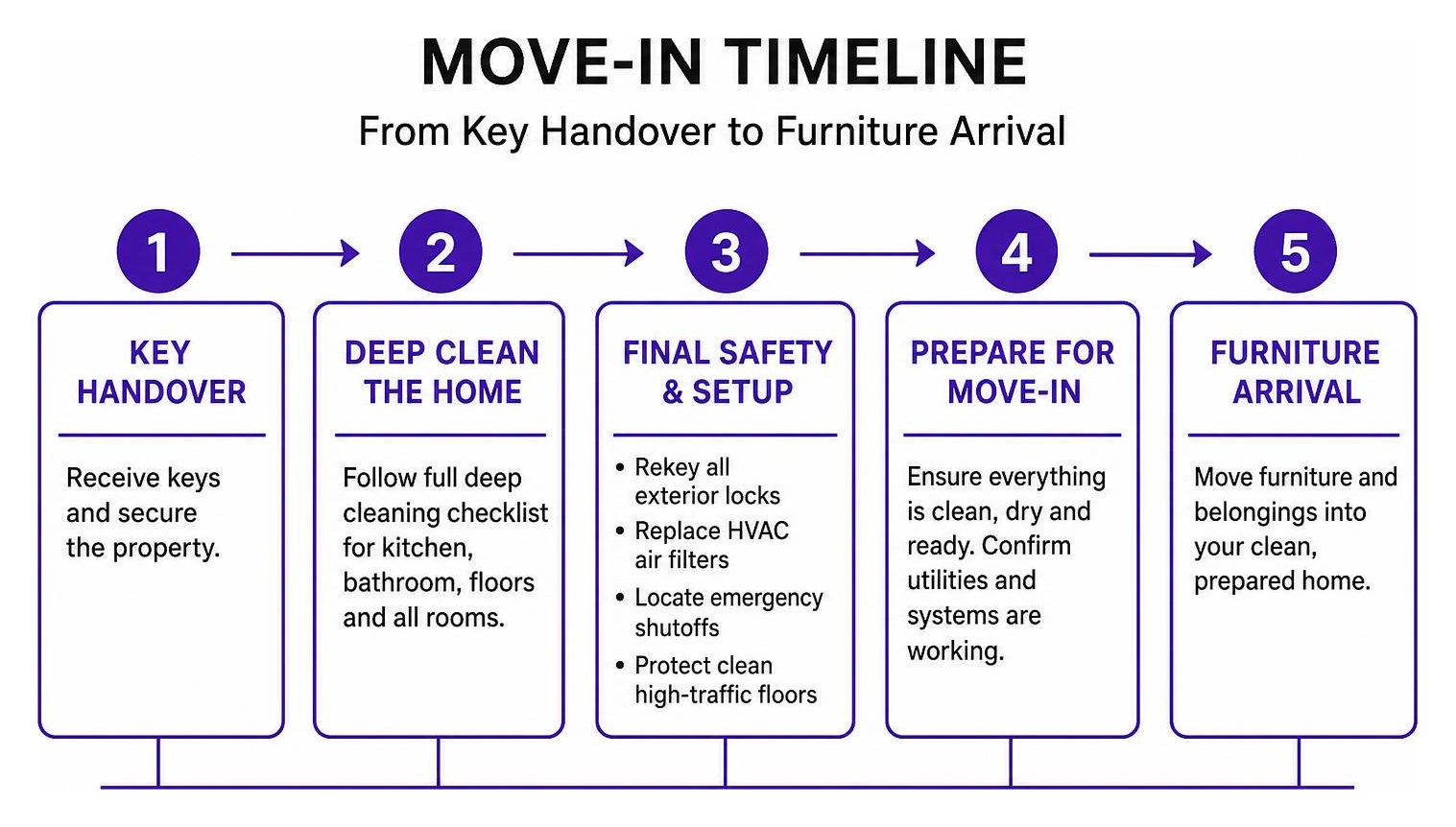
Before the first moving truck backs into your driveway, wrap up these essential safety and home setup tasks:
- Rekey All Exterior Locks: You never know how many spare keys previous owners, contractors, or realtors handed out. Swap out deadbolts or have a locksmith rekey the cylinders on day one.
- Replace All HVAC Air Filters: Take out old, dust-clogged filters, write the current date on the frame of fresh MERV-rated filters, and insert them. This keeps airborne moving dust from circulating throughout your clean home.
- Locate Emergency Shutoffs: Confirm the exact locations of your main water shutoff valve, natural gas shutoff, and primary electrical breaker panel before boxes block access to basements or utility closets.
- Protect Clean High-Traffic Floors: Lay down temporary neoprene floor runners, heavy rosin paper, or moving blankets across main entryways and hallways. This keeps movers from tracking outdoor dirt across your freshly cleaned hardwood and carpets.
Frequently Asked Questions About Deep Cleaning a New House
How long does it take to deep clean a new house before moving in?
A complete DIY deep clean of an empty 2,000-square-foot house typically takes two adults roughly 6 to 9 hours of continuous work. A trained professional cleaning crew of two to three technicians can complete the same scope in 3 to 5 hours using commercial equipment and a defined room-by-room checklist.
What hidden areas are most commonly overlooked during a move-in clean?
The most frequently forgotten areas include refrigerator condenser coils, interior dishwasher drain filters, dryer exhaust ducts, tops of ceiling fan blades, the space beneath stove drawer cavities, and HVAC return air grilles. Some of these items may require a specialty provider or add-on service depending on the home and cleaning scope.
Do brand-new construction homes really need a deep clean?
Yes. Newly constructed properties hold large amounts of fine drywall dust, sawdust inside cabinetry, paint overspray, sticker residue on surfaces, and chemical odors from flooring adhesives. A thorough post-construction clean clears these construction particulates before your family breathes them in.
Conclusion
Carrying out a structured deep clean before your moving truck arrives gives you a sanitary, fresh, and welcoming space from your very first night. Taking advantage of the brief “empty-house window” lets you clean hard-to-reach baseboards, detail appliance cavities, and refresh indoor air quality with minimal resistance.
If you are moving across Union, Westfield, Summit, Short Hills, Montclair, or surrounding New Jersey communities, our team at Apollo Cleaning Service is here to handle the hard work for you. We provide personalized, non-toxic deep cleaning services backed by our 24-hour satisfaction guarantee. Once you are settled in, we can also maintain your home’s sparkle with our flexible recurring cleaning services.
Ready to step into a pristine home? Contact Us today to receive your custom move-in cleaning quote.
